
Our Vision: to build a future where our maklaks feel confident, connected, and capable—on the water and in our communities.
Meet Our Maqlaqs Paddle Team

Ashia Wilson
Director

Paul Wilson
Media
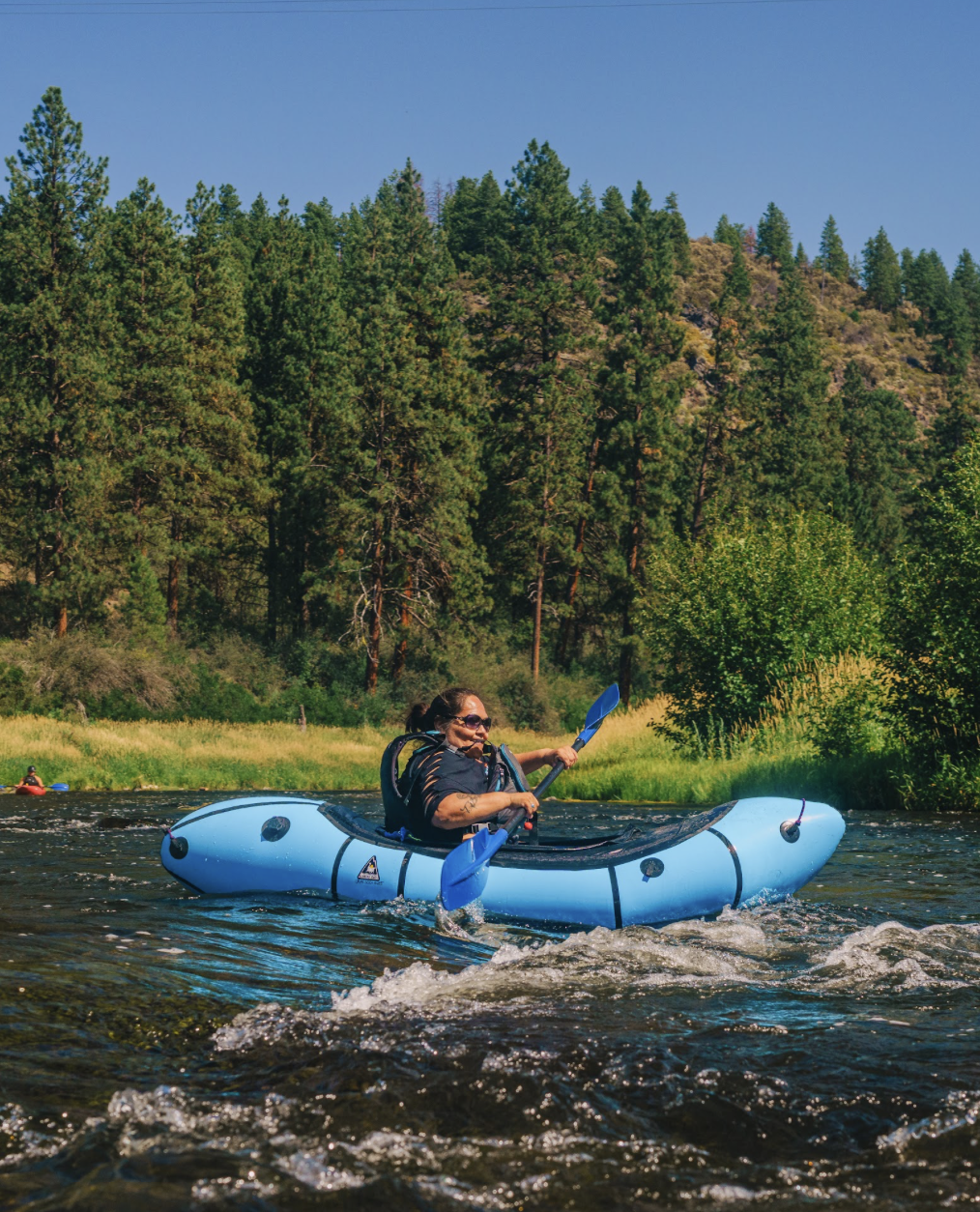
Kimberly McNair
Program Manager
Maqlaqs Paddle: Our History
Our origins trace back to 2018–2019, when our founders began paddling with Indigenous communities around the world, learning from global networks of river‑based peoples who use paddling as a tool for cultural revitalization, environmental stewardship, and youth empowerment. During the COVID‑19 pandemic, we recognized a critical need to focus this work at home in the Klamath Basin, where Indigenous youth face limited access to outdoor recreation, high costs of participation, and the ongoing impacts of removal, assimilation, and environmental degradation. What began as a small, community‑driven effort grew into a formal program, fiscally sponsored by Ríos to Rivers until January 2025, when Maqlaqs Paddle became an independent nonprofit organization.
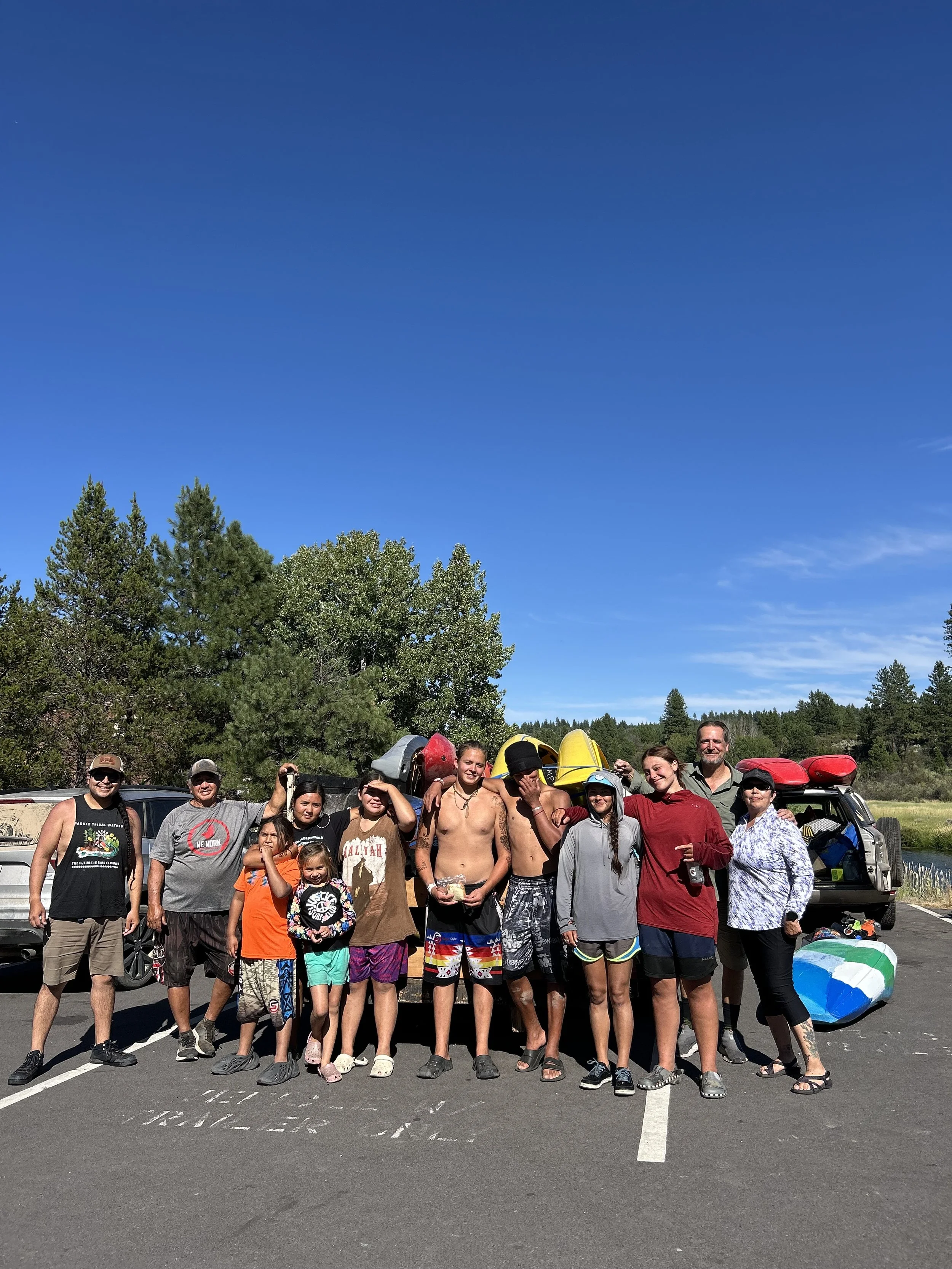
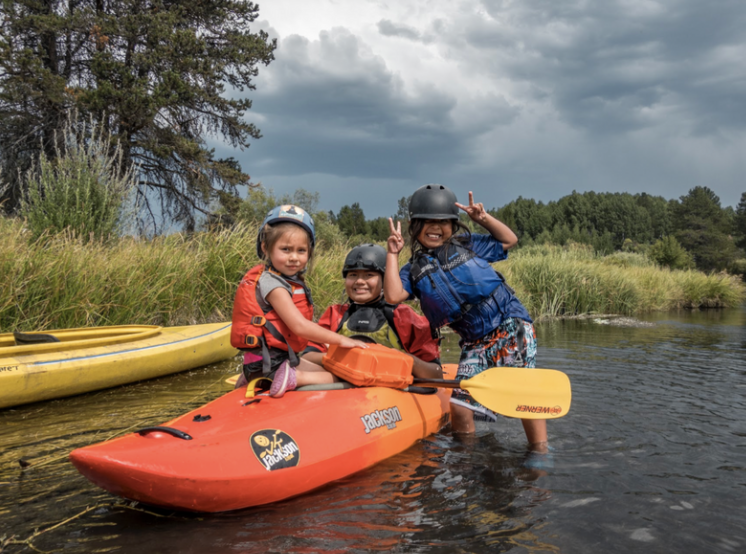
Our programming is built around a progression‑based model that meets our mukluks at every skill level. We offer day clinics on calm water for beginners, teaching foundational skills such as wet exits, forward strokes, and boat control.
Maqlaqs Paddle aims to remove financial barriers by providing all gear, transportation, instruction, and meals at no cost to families. Our instructors are paddlers who understand the cultural, historical, and emotional significance of returning to the river. We integrate teachings about water, land, and community into every program, emphasizing that paddling is not only a sport but a way of life that has sustained our peoples since time immemorial.
Our work strengthens physical health, mental well‑being, cultural identity, and environmental stewardship. Working to support safe, joyful, and culturally rooted access to the river, we are building a future where mukluks feel empowered, connected, and capable—on the water and in their communities.
Ewiksiknii, Modoknii and Numu Maklaks Overview of Who Makes up the Klamath Tribes
“Today it is common to say that the Klamath Tribes include the Klamath and Modoc Tribes and the Yahooskin Band of Paiute Indians. But this is a colonial simplification.
Today’s “Klamaths” were once many villages of maqlaqs (people) scattered across Upper Klamath Lake (ews), Klamath Marsh (ewkshi), the Williamson River (ya?aga), the Sprague River (plaikni goge), and others on the Wood River including: e’okak, e’ukwa’lksi, and kowac’di. The villages were distinct entities, had headmen, and were often matrilocal (husbands moving to wives’ villages). Modern Klamaths refer to themselves collectively as: ewksiknii or people of the waters. Traditional foods included: lilhanks (deer), c’wam, koptu, and as many as ten other distinct varieties (of suckers), ipos (roots), meYas (trout), and c’iyaals (salmon).
Today’s “Modocs” were many bands before contact with European Americans, including: Hat Creek, Hot Creek, Gumbutwas, and Lost River. Their villages surrounded Tule Lake and massive Lower Klamath Lake. The former was greatly reduced in size by encroaching Americans, who also drained the latter completely in the early 20th century for agriculture. The result is the continuing destruction of many of the Modoc bands’ traditional food sources, which included: wocas (lily pod seeds), tmo (grouse), kay (rabbit), and cew (antelope). At one time, before the coming of the whites, the Modoc and Klamath were one people. They spoke different dialects of the same language— which is fundamentally different from the languages of all neighboring peoples.
Today’s Yahooskin Paiutes are the Numu (people) whose traditional lands are to the east of the Klamaths and northeast of the Modocs. Their name (Yoo’hoo) comes from the Paiute word for grease, which was used by their ancestors to repel insects. Before the colonizers, their bands were pockets of families, including: Chocktoot, Paulina, and Winnemucca. Their hunting and gathering range was immense. Traditional foods include: tihikya (deer), kammi (jackrabbits), pihi (geese), toisabui (chokecherries), and tuyu (wild plums). As traditional enemies of the Klamaths, the early years on the reservation were difficult. Yainax Agency on the eastern side was established in 1870 to minimize conflicts with the Klamath. The Paiute language is wholly different from both Klamath and Modoc.
Reducing this complexity to “tribes” was a political act of the United States to facilitate treaty making. It was also a function of 19th century anthropologists’ prejudices. After 140 years of living together on the same reservation, many of today’s members trace their lineage to more than one of the three “tribes”.”
Written by Clayton Dumont, Clay Chocktoot, Steve Weiser, Christine Allen, Debbie Riddle, Kya Jackson, and Buzz Kirk
Mo sepk’eec’a sa’ank
Thank you very much, all of you.
With gratitude to our supporters:
Humboldt Area Foundation
Oregon Community Foundation
Spirit Mountain Community Fund
The Collins Foundation
Philanthropy Northwest
11th Hour Project
Potlatch Fund
Roundhouse Foundation
Justice Outside
Catena Foundation
Water Equity Fund
River Roots
Rios to Rivers
Páah Áama Paddle Club
Water Climate Trust