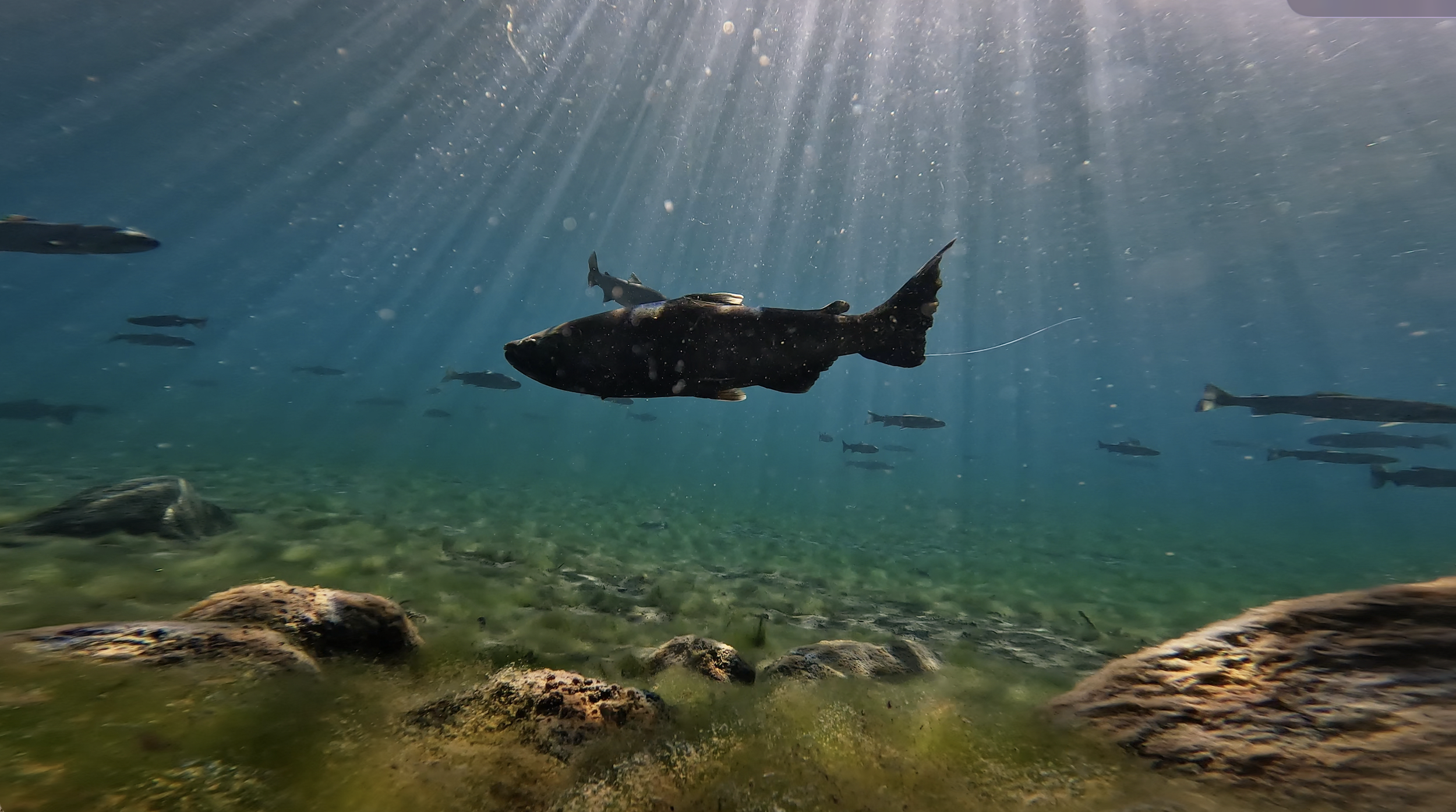
Ciyaals
Common name:Salmon (Chinook, Coho, Steelhead depending on run)
Klamath name(s): C’iyaal’s
Cultural role: Salmon are central to ceremony, identity, and teachings about sacrifice, reciprocity, and renewal. Their return each year is a reminder of responsibility and balance.
Seasonal presence: Migrate from ocean to river systems in seasonal runs; juveniles rely on cold, clean freshwater before migrating out.
Life expectancy: Most adults return to spawn at 3 or 4 years of age. While salmon can live for 2 to 7 years in general
Ecological Role
Salmon bring marine nutrients into inland ecosystems, feeding forests, wildlife, and other fish. Their bodies fertilize riparian plants and support entire food webs. They are a keystone species whose health reflects watershed health.
Salmon require cold, clean, connected water from headwaters to the ocean. They depend on steady flows for migration, deep pools for resting, and clean gravel for spawning. Temperature, oxygen, and flow timing shape every stage of their life cycle.
How Water Diversions Harm Ciyaals
Too little water: Low flows block migration, warm quickly, and create lethal conditions for eggs and juveniles.
Polluted return flows: Nutrient‑rich runoff fuels algae, reduces oxygen, and increases disease risk.
Rapid flow changes: Sudden drops strand juveniles, expose redds (nests), and disrupt migration timing.
Altered hydrology: Channelization and wetland loss remove natural cooling and filtration, increasing stress.
Many salmon runs have been severely reduced or extirpated from the Upper Basin due to dams, dewatering, and degraded water quality. Downstream runs still face warm water, disease outbreaks, and poor juvenile survival in low‑flow years.
For the first time in more than a century, salmon have begun returning to the Upper Klamath Basin following dam removal. In 2024, only a small handful of Chinook—fewer than 10 fish—reached Spencer Creek, the first tributary above the former dam sites. In 2025, early monitoring shows that only a very small number of salmon have reached Upper Klamath Lake, far below what a self‑sustaining population requires. These numbers are not a recovery — they are a warning. Without immediate protection of flows, cold water, and habitat, the salmon that have finally returned home after 100+ years will not survive long enough to rebuild their runs, and the opportunity to restore salmon to the Upper Basin will be lost within a generation.
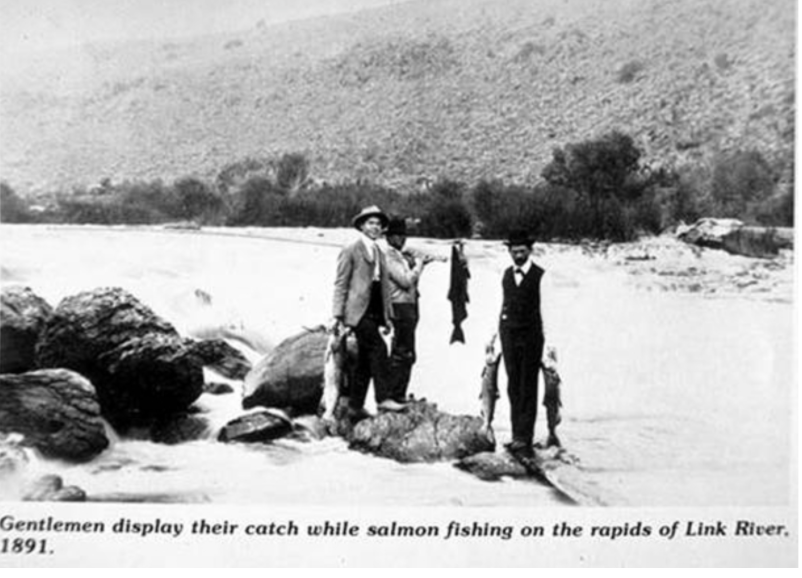
The loss of salmon affects ceremony, food sovereignty, and intergenerational teachings. 4-6 Generations of Klamath and Modoc families have lost opportunities to learn harvesting, processing, and the stories tied to this relative.
Current Conditions of Ciyaals in the Upper Klamath Basin
Signs of Recovery
Dam removal, improved flows, and habitat restoration downstream are creating new opportunities for salmon to return to ancestral waters.
What Ciyaals Need to Survive
Cold, clean, connected water; natural flow patterns; healthy floodplains; and protected spawning and rearing habitat.