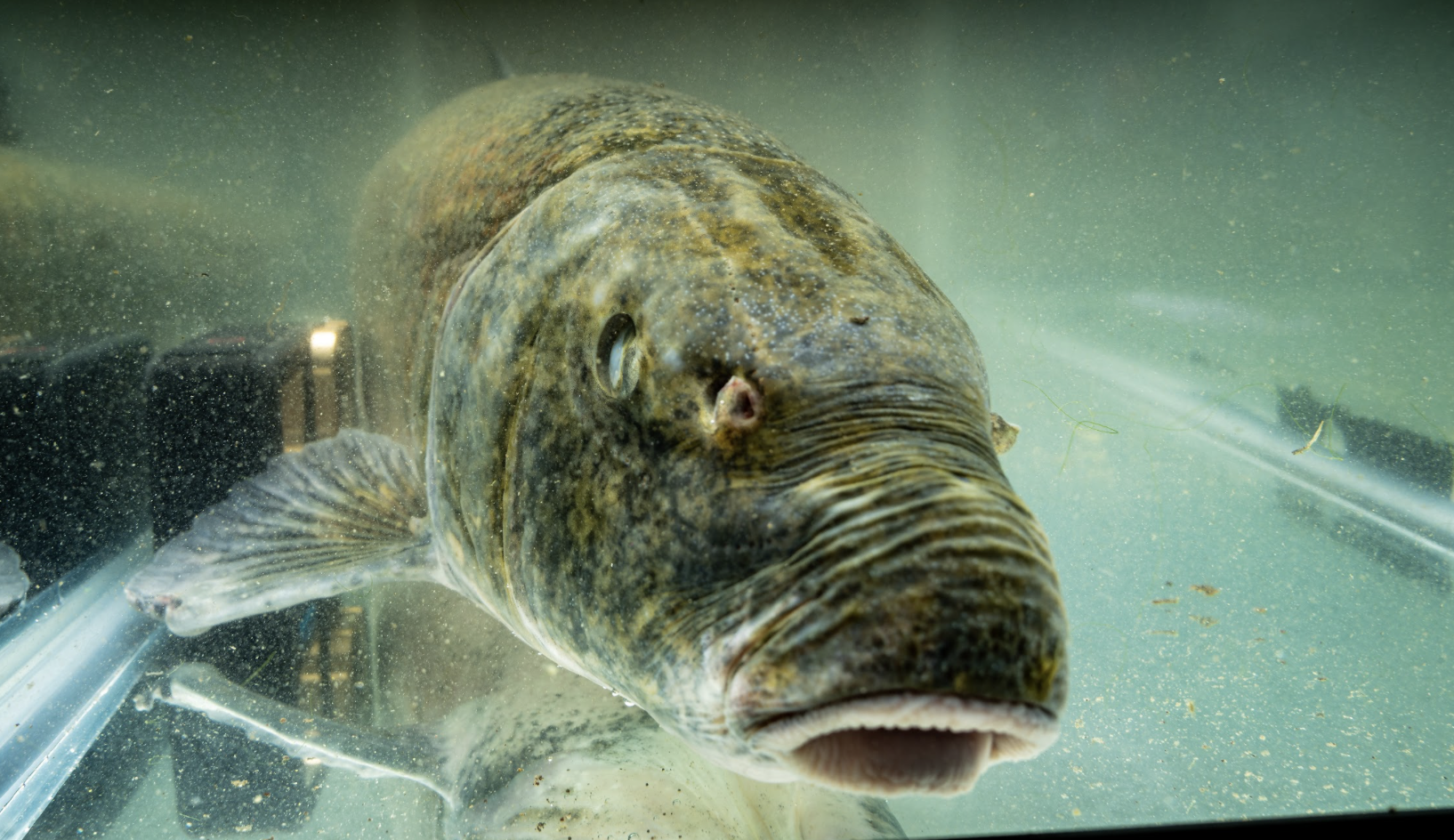
C’waam

Common name: Lost River Sucker
Klamath name: C’waam
Cultural role: A sacred, ancient relative central to Klamath, Modoc, and Yahooskin peoples. C’waam are part of origin stories, ceremonies, and teachings about reciprocity, responsibility, and balance.
Seasonal presence: Year‑round in the Upper Klamath Basin; spring is the primary spawning season.
Life Expectancy: 40-50 years old; almost all adults are 30+ yrs old, a stark reminder that an entire species is now carried almost entirely by its last remaining grandparents.
Ecological Role
C’waam help maintain balance in lake and river ecosystems by cycling nutrients, grazing algae, and supporting predators and scavengers. Their presence signals the health of the entire watershed. C’waam are endemic to Upper Klamath Basin, meaning they only exist here, no where else in the entire world.
C’waam depend on cold, clean, well‑oxygenated water and access to connected river and lake habitats. They need stable flows for migration, deep pools for refuge, and clean gravel beds for spawning. Their entire life cycle is shaped by water quality and quantity.
How Water Diversions Harm C’waam
Too little water: Low flows warm quickly, reducing oxygen and stressing fish. Shallow areas dry out, blocking migration and exposing eggs to predators and heat.
Polluted return flows: Runoff carrying cow manure, fertilizers, and sediment fuels algae blooms, increases ammonia, and lowers oxygen—conditions lethal to eggs and juveniles.
Rapid flow changes: Sudden drops strand fish, disrupt spawning, and destroy nursery habitat.
Altered hydrology: Channelization and wetland loss remove natural filtration and cooling, making the system more vulnerable to toxic algae.
C’waam populations are critically low, with very few young fish surviving to adulthood. Chronic low water years, warm temperatures, and nutrient‑loaded return flows have created conditions where juveniles rarely survive their first summer.
C’waam have collapsed from well over 40,000 c’waam to roughly 2,000–4,000 aging adults, with almost no young fish surviving for more than two decades. Under these conditions, the species has no path to recovery. Without major improvements to water quality and habitat, C’waam will disappear from Upper Klamath Lake. Extinction is not a possibility—it is a certainty unless real protection and recovery actions begin immediately.
The decline of C’waam affects food sovereignty, ceremony, and intergenerational teachings. For Klamath and Modoc people, our very survival was once tied directly to the sustenance C’waam provided, once a food that kept us alive.
Current Conditions of C’waam in the Klamath Basin
Signs of Recovery
Habitat restoration, wetland reconnection, and improved water management can support recovery. Some restoration sites show improved water quality and juvenile survival, offering hope for long‑term healing.
What C’waam Need to Survive
Cold, clean, connected water; healthy wetlands; reduced nutrient pollution; stable seasonal flows; and protected spawning and nursery habitat.