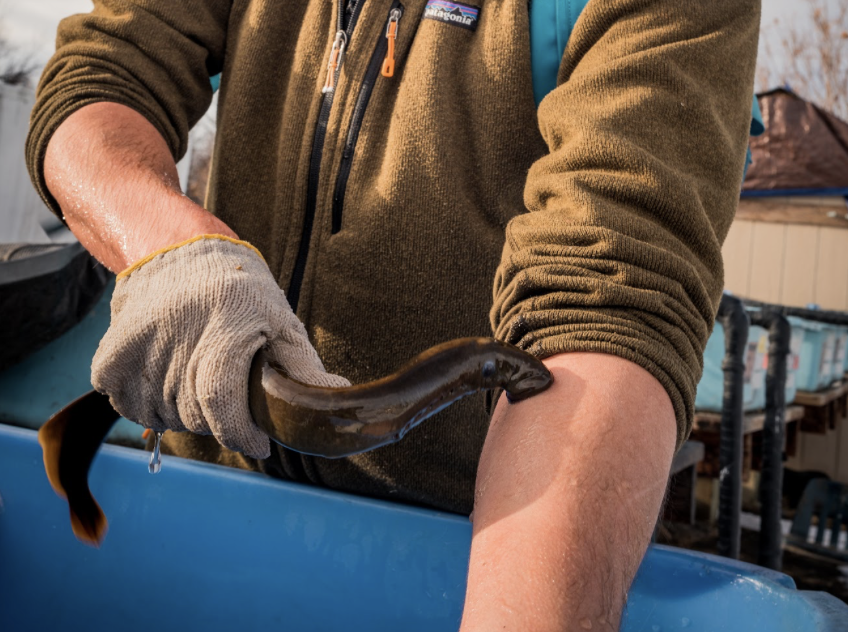
Kawe

Common name: Pacific Lamprey, Pit-Klamath Brook Lamprey (entirely freshwater)
Klamath name(s): Káwe
Cultural role: Káwe are honored relatives known for their strength, persistence, and healing qualities. They are used in ceremony, medicine, and teachings about resilience.
Seasonal presence: Adults migrate upstream to spawn; larvae live in freshwater sediments for years. Pit-Klamath Brook Lamprey as adults, do not eat at all; they live on energy stored during their larval stage,
Life expectancy: 5-9+ years
Ecological Role
Káwe are nutrient cyclers, prey for many species, and important for river health. Their larvae filter water by feeding on microorganisms, improving clarity and quality.
Káwe rely on cool, flowing water, clean sediments for larvae, and unobstructed passage for adults. They need stable flows and oxygen‑rich habitats.
How Water Diversions Harm Kawe
Too little water: Low flows block migration and dry out larval habitat.
Polluted return flows: Sediment and manure runoff smother larvae and reduce oxygen.
Rapid flow changes: Sudden drops strand larvae and expose spawning beds.
Altered hydrology: Channelization removes the soft, silty habitats larvae depend on.
Káwe populations have declined due to barriers, warm water, and degraded sediment quality. Many traditional harvesting areas no longer support healthy runs.
Pacific Lamprey once migrated through the Klamath Basin in huge, abundant runs, feeding families, ceremonies, and entire ecosystems. Today, only small, scattered remnants of those runs remain, with many traditional harvesting areas seeing near‑zero returns. Barriers, dewatering, warm water, and polluted return flows have wiped out the habitats lamprey need for both migration and larval development. Without immediate, meaningful protection of flows, sediments, and passage, the extinction of lamprey from much of the Upper Basin is inevitable. Under current conditions, they cannot recover, and their disappearance is a certainty unless real restoration happens now.
Current Conditions of Kawe in the Upper Klamath Basin
Signs of Recovery
Where barriers are removed and flows improve, Káwe quickly return, showing strong resilience when given the chance. Stewardship includes restoring passage, protecting sediments, monitoring water quality, and teaching youth about lamprey’s role in the ecosystem.
What Kawe Need to Survive
Clean, cool water; healthy sediments; connected migration routes; and stable flows.