
Proposed Project: North Swan Lake Pumped Hydroelectric
The Swan Lake North Pumped Storage Project remains unbuilt, under federal review, and not approved for construction under its amended design. The most recent federal filings confirm that regulators are still preparing a new Environmental Assessment and have not granted final authorization for the project to proceed.
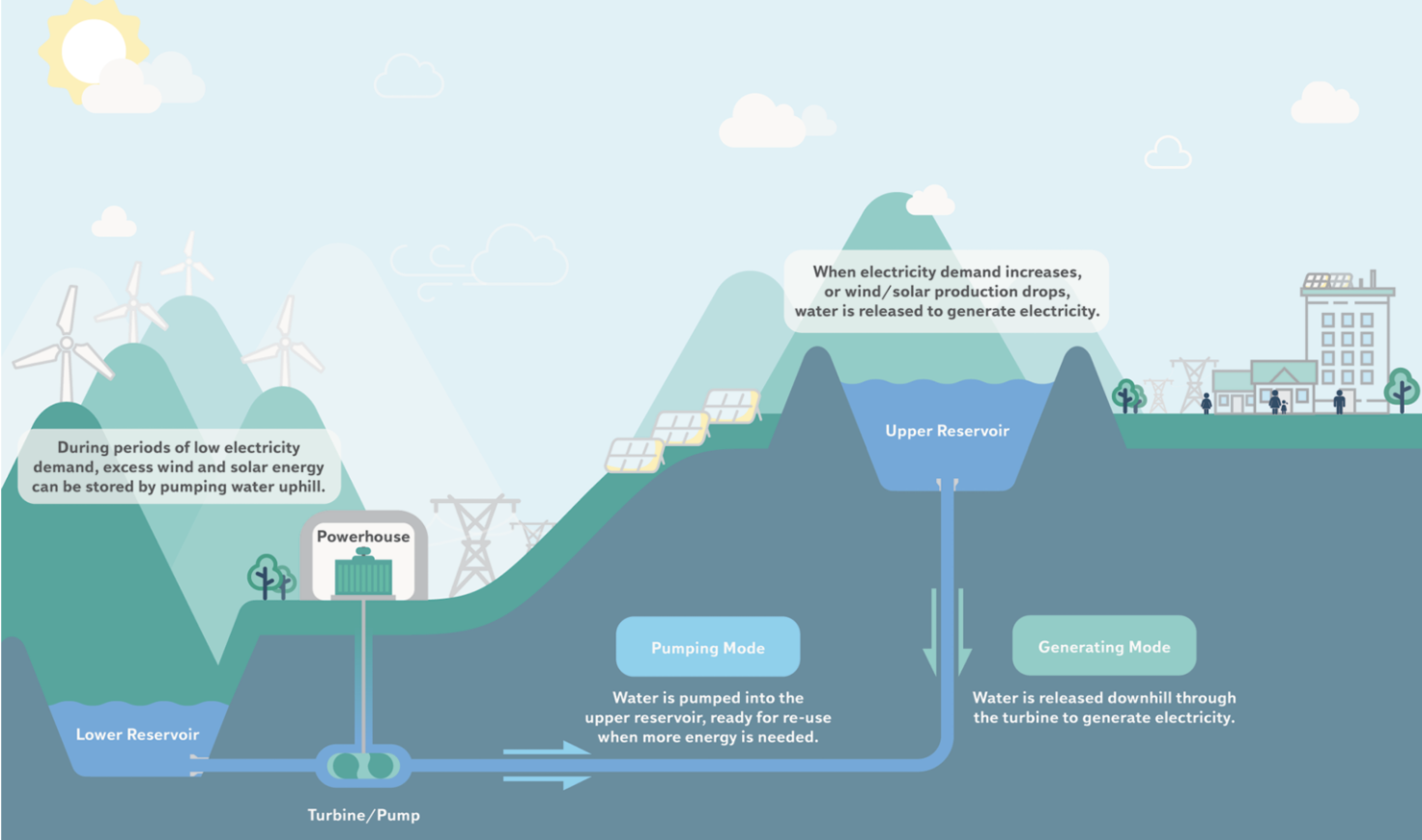
What exactly is the Swan Lake North Pumped Storage Project?
The Swan Lake North Pumped Storage Project is a proposed 393–400 MW hydroelectric energy‑storage facility planned 11 miles northeast of Klamath Falls. It would create two large artificial reservoirs—an upper and a lower—connected by tunnels and pump‑turbines. The system would pump water uphill when electricity is cheap and release it downhill to generate power during peak demand.
The project is unbuilt and remains under federal review.
Current Status of Swan Lake:
FERC issued a Notice of Intent to Prepare a new Environmental Assessment on December 30, 2024, after the developer submitted a major Non‑Capacity Amendment of License in April 2024 with supplemental materials in October 2024. The project is still described as “unconstructed” and located about 11 miles northeast of Klamath Falls, occupying federal lands managed by the Bureau of Land Management and Bureau of Reclamation. This means the project is not approved in its amended form and remains in a prolonged federal review process.
Recent Developments
The developer continues public‑facing promotion of the project as a clean‑energy storage solution, including site visits by state officials and economic development groups.
Federal agencies have not issued a final Environmental Assessment or approval for construction.
Owner of project submitted transmission route changes to FERC December 2025
The project remains in the permitting and review stage, with no construction authorized.
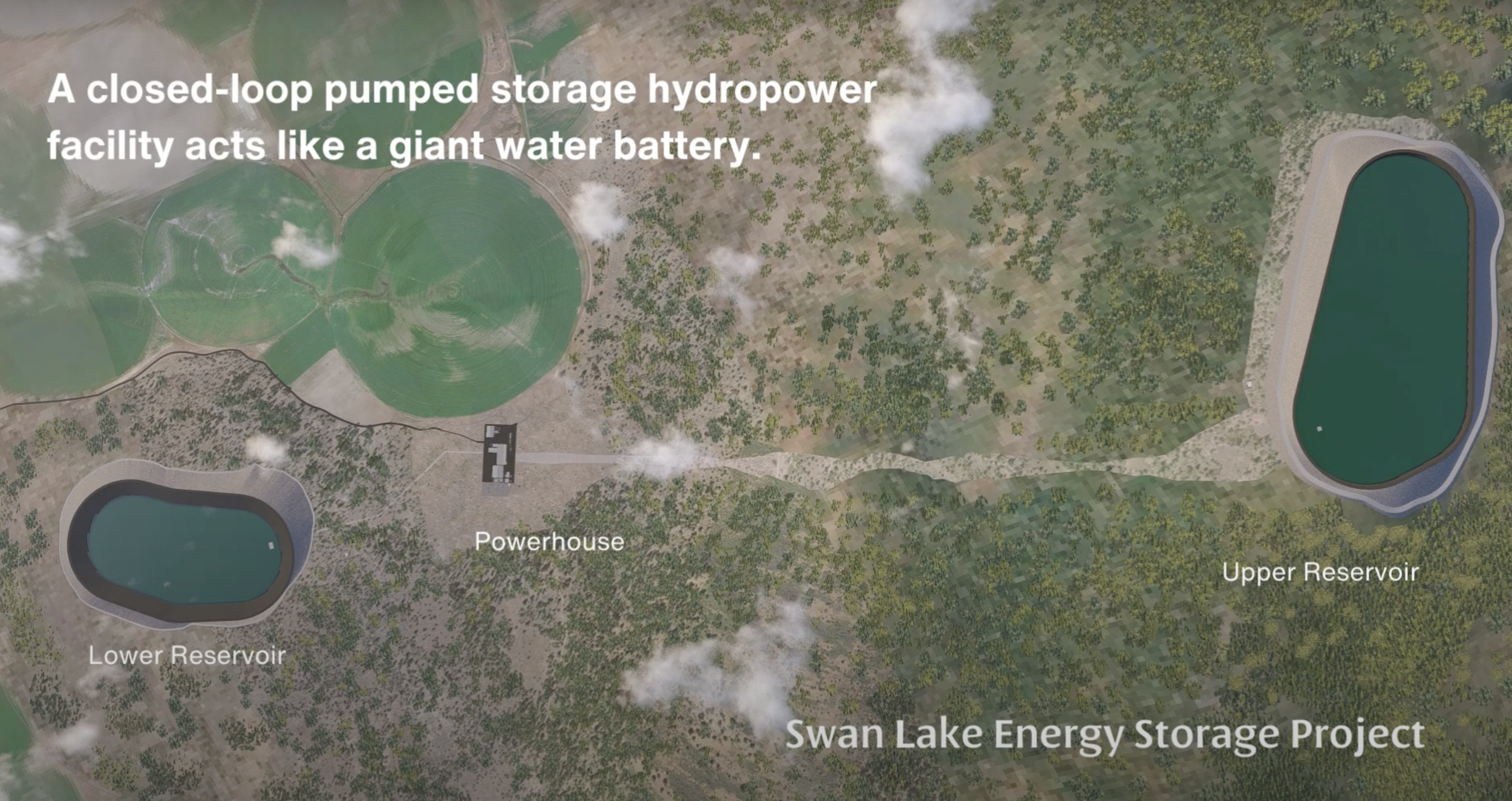
What the project proposes, and the history behind it…
A 400 MW pumped‑storage hydroelectric facility designed to store energy for up to 9.5 hours and release it during peak demand.
Two large artificial reservoirs connected by tunnels and pump‑turbines.
Significant new transmission infrastructure across Klamath County.
Development by Copenhagen Infrastructure Partners, with engineering support from multiple contractors.
Timeline and Regulatory History
2015: Original license application submitted to FERC.
2019: FERC issued a Final Environmental Impact Statement.
2020: A 50‑year federal license was issued (2020–2070).
2024: Developer filed a major Non‑Capacity Amendment of License (April 12, 2024; supplemented October 3, 2024).
Dec 30, 2024: FERC announced a new Environmental Assessment, confirming the project is still unconstructed and under review.
The project has been in the permitting pipeline for more than a decade and still lacks approval to build under its amended design.
Who Owns It?
The project is being developed by Swan Lake North Hydro LLC, which is owned by Copenhagen Infrastructure Partners (CIP)—a global private equity firm specializing in large‑scale energy infrastructure.
CIP’s business model centers on long‑term infrastructure assets, meaning the project is designed to operate for 50 years or more, matching the federal license term.
Why Klamath, Modoc, and Numu People Need to Pay Attention
This project is often marketed as “clean energy,” but the on‑the‑ground impacts fall directly on the lands, waters, wildlife, and cultural resources our communities depend on. The risks are substantial and long‑lasting.
Massive Groundwater Withdrawals
The project would pump groundwater to initially fill and continually maintain its reservoirs—drawing from the same aquifers that feed springs, wetlands, and interconnected surface waters in the Klamath Basin.
Federal documents confirm groundwater would come from the region’s agricultural pumping system.
This threatens:
Spring systems that sustain C’waam, Koptu, Wocus, C’iyaals and Mares’ Eggs
Wetlands essential to waterfowl, amphibians, and First Foods
Already‑declining aquifers in a drought‑stressed Basin
Critical Migration Corridor for Deer and Elk
The proposed site sits in a major north–south migration corridor. Reservoirs, roads, fencing, and transmission lines would fragment habitat and disrupt long‑established movement patterns.
Loss of Open‑Water and Wet‑Meadow Complexes
The area contains extensive wet meadows and open‑water habitats that are culturally and ecologically important. These landscapes support:
Migratory ducks
Cackling geese
White‑fronted geese
Swans
Sandhill cranes
These species rely on intact wetlands—many of which are already diminished across the Basin.
Heavy Construction and Industrialization of the Landscape
The project requires:
New permanent access roads
A powerhouse and substation
High‑voltage transmission lines
Blasting, excavation, and long‑term industrial activity
This level of disturbance threatens cultural sites, wildlife habitat, and the integrity of the land itself.
Man Camps and the Risk of Missing & Murdered Indigenous Peoples (MMIP)
Large‑scale construction projects often bring temporary worker housing (“man camps”). Across the U.S. and Canada, these camps correlate with increased rates of violence, trafficking, and MMIP cases in our communities.
If built in Klamath County, this risk becomes immediate and local.
Long-Term Lock‑In
With a 50‑year license, the project would lock Klamath, Modoc, and Numu homelands into decades of:
Groundwater extraction
Habitat fragmentation
Industrial presence on culturally important landscapes
Increased fire risk from new transmission corridors
Ongoing threats to s?aaMaks and treaty‑reserved resources
What This Means for Our Communities
For Klamath, Modoc, and Numu peoples, the Swan Lake project is not just an energy proposal—it is a direct threat to water, wildlife, cultural continuity, and community safety. It risks deepening the ecological crises already harming our s?aaMaks and undermines our sovereign responsibility to protect the land and waters for future generations. The project would require major land disturbance, new transmission corridors, and decades of industrial activity in an already stressed watershed.
The key next step is FERC’s release of the new Environmental Assessment, which will determine whether the project advances, stalls, or faces new conditions. Until that document is published, the project remains in regulatory limbo.
Learn more about Swan Lake Pumped Hydro Project:
Oregon Water Justice Alliance Literature Reviews of Project:
Swan Lake Pumped Storage Project Assessment: Threats, Status, and Opportunities to Intervene
Swan Lake Pumped Storage Project Assessment: An ecological, cultural and financial disaster that will likely never be completedOregon Water Justice Alliance Swan Lake North Hydro Summary
Swan Lake Site Footage:
Tribal Member’s Overview of Say No to Swan Lake Video
Tribal Group Statements of Say No to Swan Lake Video
Swan Lake Area Drone Footage from January 2024
Swan Lake is Not for Sale; WE are Not for Sale
Additional Project Resources:
February 2012, KOBI-TV Swan Lake Hydro Project, 1-Minute Video
August 2019, KOBI-TV Swan Lake Hydro Project, 1-Minute Video
Swan Lake Permitting Information + Application Files
Swan Lake Energy Storage Project Advertisements:
Swan Lake Energy Storage Website
September 2022 Swan Lake Energy Storage Company Advertisement, Rye Development Swan Lake- Learn More About The Project!, 2-Minute Video
September 2022 Swan Lake Energy Storage Company Advertisement, The Swan Lake Energy Project- Minimizing land use impacts, 30-Second Video
August 2022 Swan Lake Energy Storage Company Advertisement, Swan Lake Overview, 2-Minute Video
November 2023 Swan Lake Energy Storage Company Advertisement, Swan Lake Flyover, 1-Minute Video