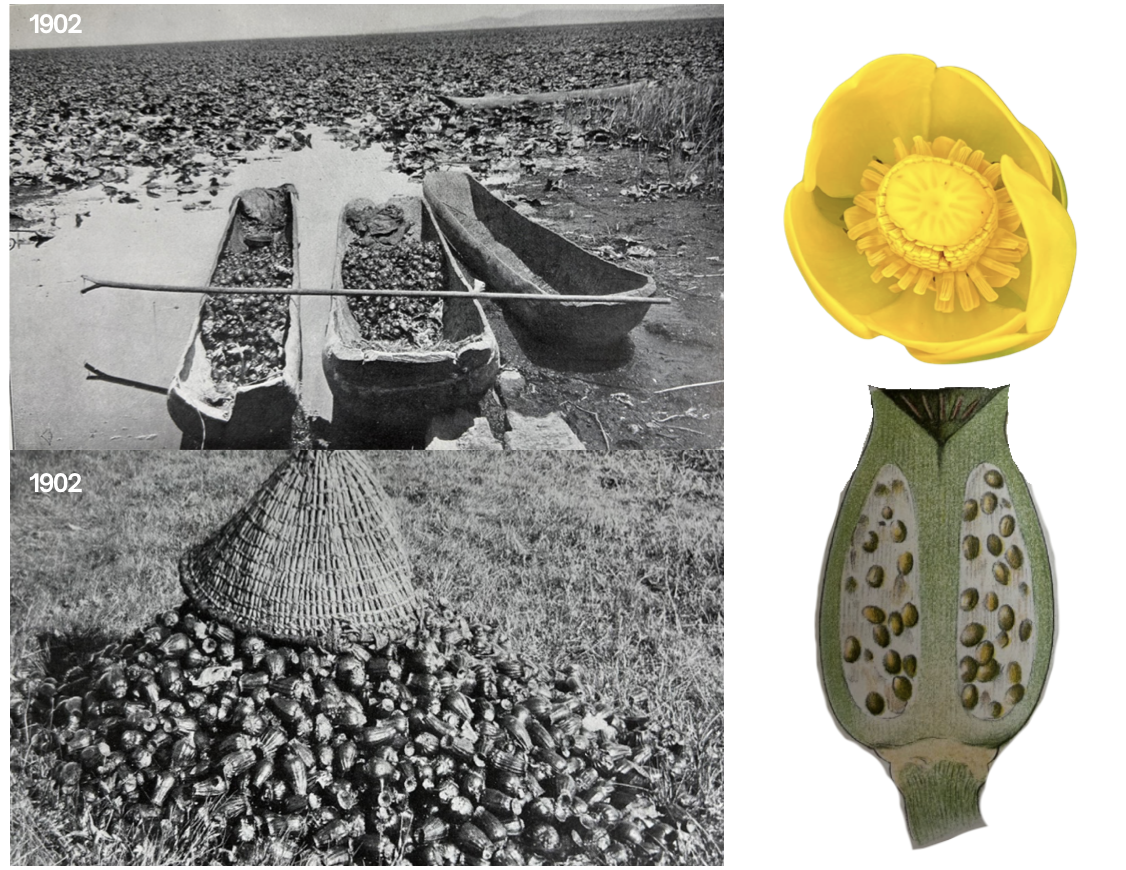
Wokas
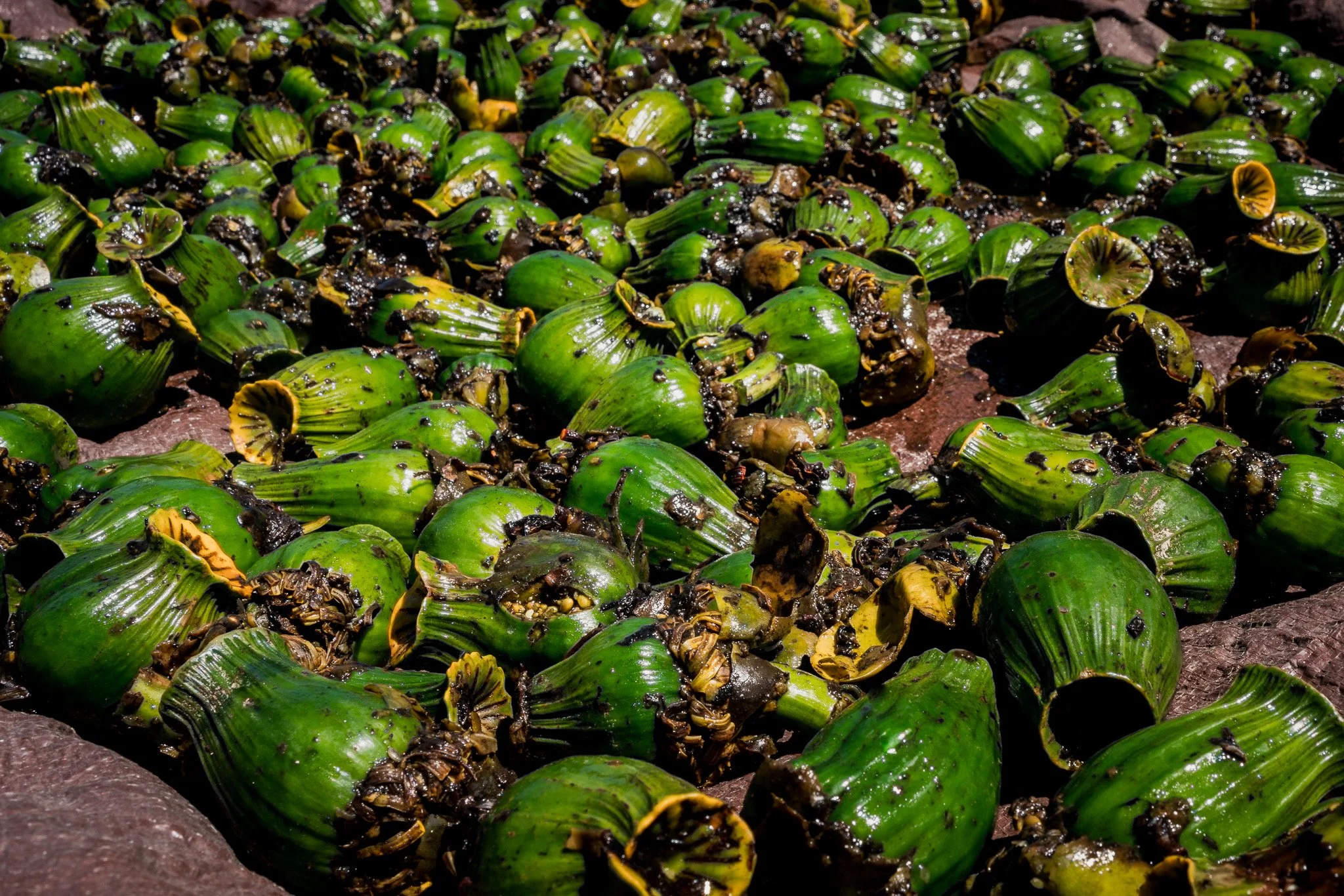
Common name: Yellow Pond Lily
Klamath name: Wokas
Cultural role: A staple First Food of the Klamath Tribes, used for flour, roasting, and ceremony. Wokas connects families to marshlands, gathering traditions, and seasonal cycles.
Seasonal presence: Blooms and produces seeds in late spring through summer in marshes and shallow lakes.
Ecological Role
Wokas provides habitat for fish, birds, and amphibians. Its leaves shade water, reduce temperature, and support wetland biodiversity.
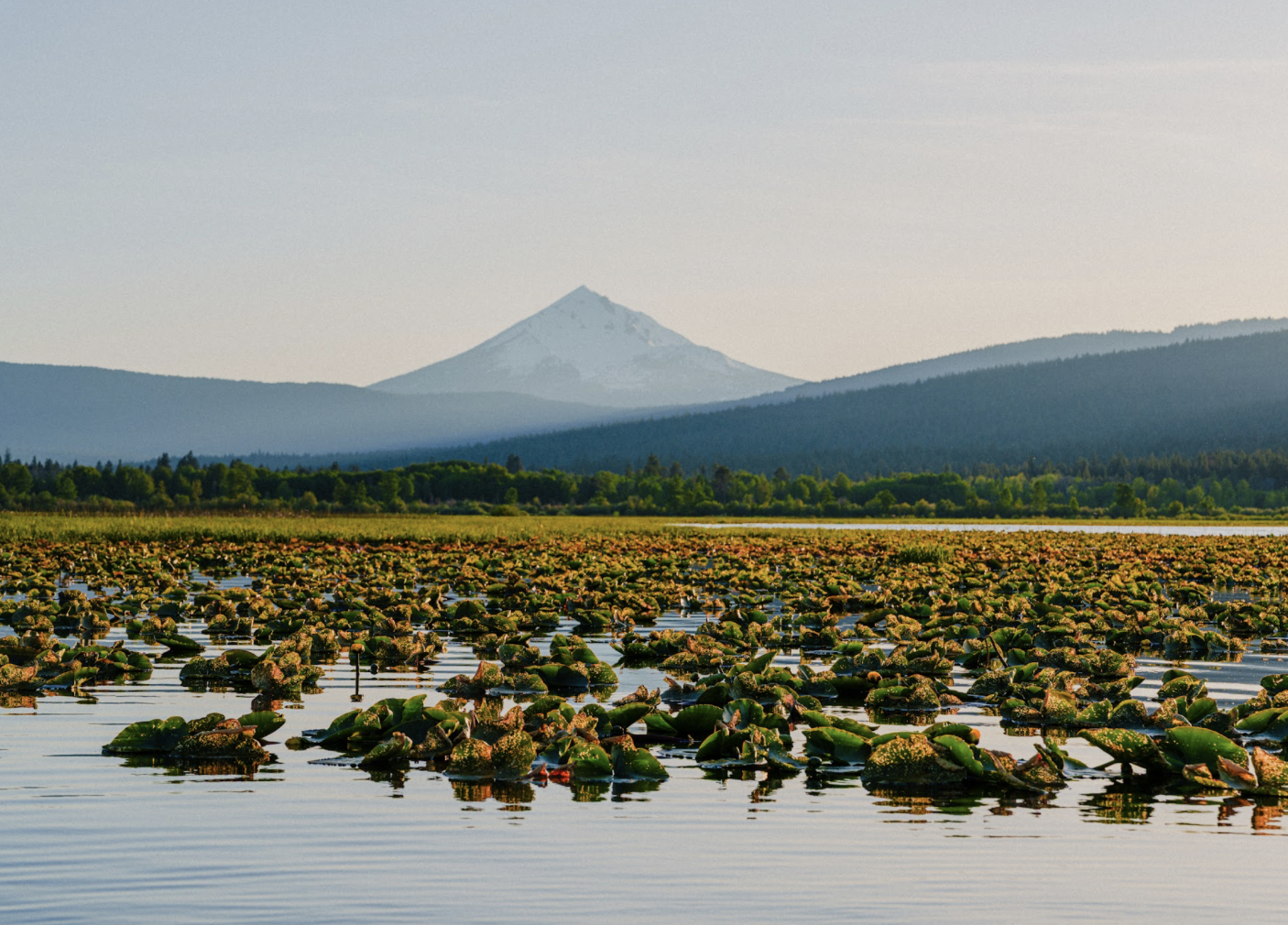
Wokas depends on stable, shallow wetlands with clean water and natural seasonal flooding. Water depth, clarity, and sediment quality determine its growth and seed production.
How Water Diversions Harm Wokas
Too little water: Wetlands dry out, exposing roots and preventing flowering and seed production.
Polluted return flows: Sediment and nutrient runoff smother plants, fuel algae, and reduce water clarity.
Rapid flow changes: Sudden drops in water levels strand plants and disrupt growth cycles.
Altered hydrology: Drained wetlands eliminate the habitat Wocus depends on.
Many historic Wokas beds have been lost due to wetland draining, low lake levels, and poor water quality. Remaining beds are vulnerable to warm, shallow, nutrient‑rich conditions.
Historical wetland maps show that the Upper Klamath Basin once supported over 350,000 acres of shallow marsh and lake‑edge wetlands where Wokas thrived. Today, less than 20,000 acres of suitable Wokas habitat remain, representing a loss of more than 90% of the historic Wokas beds due to draining, diversions, and long‑term dewatering of marshlands.
Loss of Wokas affects food traditions, gathering practices, and teachings tied to one of the biggest components of Ewiksiknii identity and spirituality.
Current Conditions of Wokas in the Klamath Basin
Signs of Recovery
Stewardship includes wetland restoration, protecting water levels, monitoring plant health, and teaching youth about gathering protocols and respect. Where wetlands are reconnected and water quality improves, Wokas returns quickly and supports renewed gathering traditions.
What Wokas Need to Survive
Stable wetlands, clean water, natural flooding cycles, and protection from sediment and nutrient pollution.